

Scanning probes can be used to capture the shape and profile of prismatic or complex workpieces very quickly. Whereas “touch-trigger” measurement only measures individual points, scanning records a large number of data and thus provides much more precise information about the shape and form of the feature or workpiece. Scanning is therefore used wherever complex free-form geometries are reproduced or where shape accuracy or complex surfaces must be within certain tolerances.
Scanning requires a fundamentally different approach to sensor design, coordinate measuring machine control and data analysis. The innovative design of the probes for scanning (no motors, no clamping mechanisms) provides exceptional dynamic behaviour, enabling the best scanning performance, even at high speeds. Separate optical sensing provides independent sensing of stylus deflections for greater accuracy.
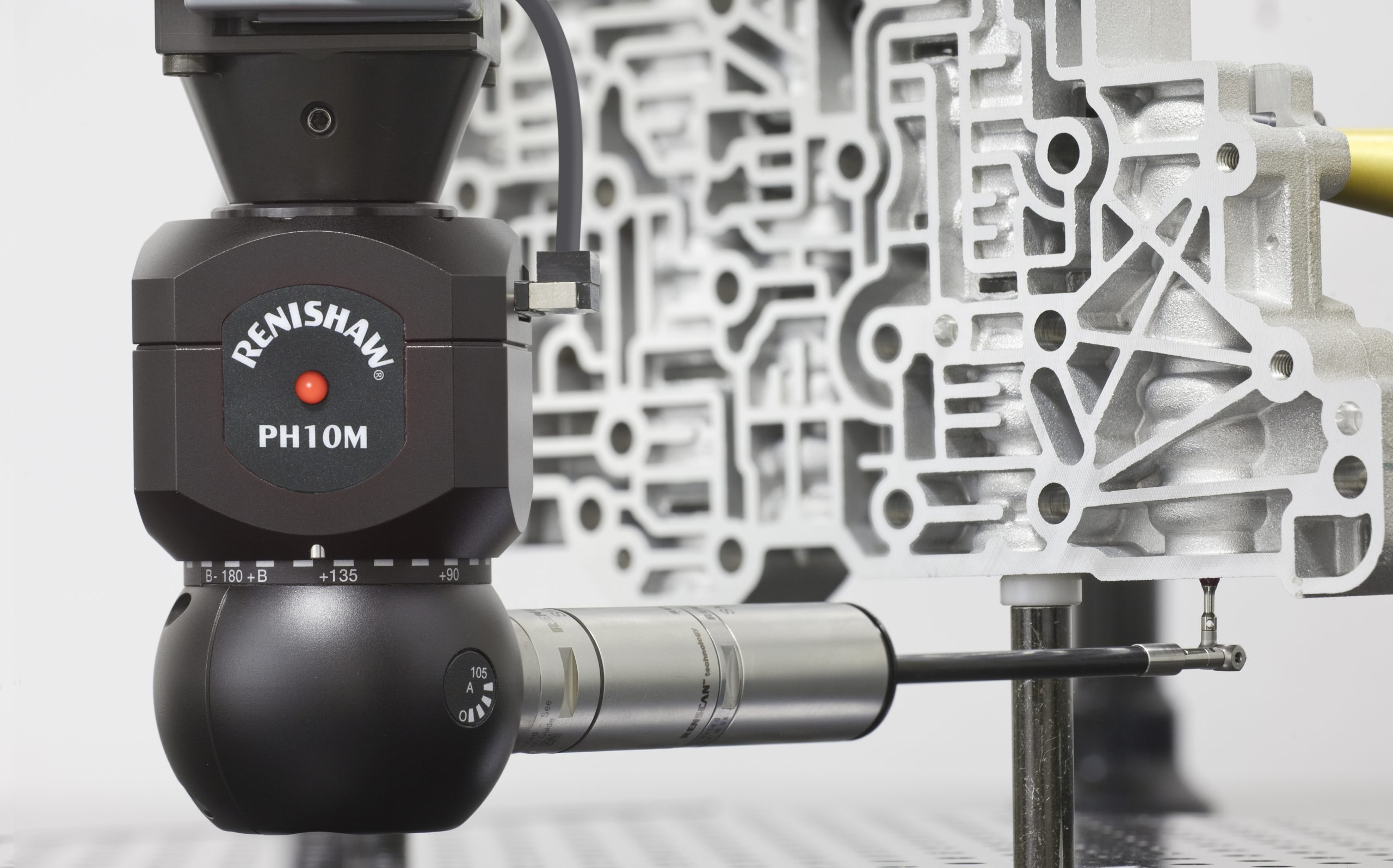
Scanning probes can be used to capture the shape and profile of prismatic or complex workpieces very quickly. Whereas “touch-trigger” measurement only measures individual points, scanning records a large number of data and thus provides much more precise information about the shape and form of the feature or workpiece. Scanning is therefore used wherever complex free-form geometries are reproduced or where shape accuracy or complex surfaces must be within certain tolerances.
Scanning requires a fundamentally different approach to sensor design, coordinate measuring machine control and data analysis. The innovative design of the probes for scanning (no motors, no clamping mechanisms) provides exceptional dynamic behaviour, enabling the best scanning performance, even at high speeds. Separate optical sensing provides independent sensing of stylus deflections for greater accuracy.